What Does Stabilizer Bar Link Do? [B2B Guide]

+86-15333319453
All Categories
What Does Stabilizer Bar Link Do: Essential Guide for Suspension Professionals

What Does Stabilizer Bar Link Do: Essential Guide for Suspension Professionals

The stabilizer bar link, also known as a sway bar link or anti-roll bar link, is a critical component of a vehicle’s suspension system. It connects the stabilizer bar (anti-roll bar) to the control arm or strut, allowing the bar to transfer forces between the left and right wheels. When a vehicle corners, body roll causes the suspension to compress on one side and extend on the other. The stabilizer bar resists this twisting motion, and the links are the pivot points that transmit this resistance. In essence, the stabilizer bar link plays a vital role in reducing body roll, improving handling, and enhancing tire contact with the road. This page aims to explain what does stabilizer bar link do in detail, covering its function, signs of wear, replacement importance, and how choosing a high-quality link ensures safety and performance. We are Pingxiang Aoding Rubber Products Co., Ltd.
Get A Quote

Advantages of the product

Enhanced Vehicle Stability and Control

Our stabilizer bar links are precision-engineered to provide superior rigidity and durability, ensuring effective transfer of forces between the stabilizer bar and suspension. This direct connection minimizes body roll during cornering, lane changes, and evasive maneuvers, resulting in predictable handling and increased driver confidence. When you ask ‘what does stabilizer bar link do’, the answer lies in its ability to keep the vehicle flat and balanced. Our links feature hardened steel construction with corrosion-resistant coatings, guaranteeing consistent performance in diverse climates. Additionally, we utilize advanced rubber bushings that absorb micro-vibrations while maintaining precise alignment, reducing noise and enhancing ride comfort. With our links, you experience optimal tire contact, which improves braking and acceleration stability. For high-performance and off-road applications, our links offer exceptional torsional strength to withstand severe twisting forces.

High-Quality Materials and Long-Lasting Performance

At our factory, we use only premium materials for our stabilizer bar links, including alloy steel and high-grade rubber compounds. The links are manufactured under strict tolerances with a state-of-the-art automated production line, ensuring consistency across every batch. Our commitment to quality is evident in our certifications: IATF 16949 for quality management, ISO 14001 for environmental responsibility, and ISO 45001 for occupational health and safety. We are proud to be a National High-Tech Enterprise. Our products undergo rigorous testing in our in-house R&D center, including salt spray tests, heat aging, and dynamic load cycling. This ensures that our stabilizer bar links withstand harsh conditions such as road salt, moisture, and temperature extremes. The use of premium rubber for bushings provides resistance to cracking and deformation, maintaining the link’s integrity over years of service.

Comprehensive Support and Customization

Understanding what does stabilizer bar link do is just the beginning; we offer additional value with flexible ODM & OEM services. We can customize stabilizer bar links to your exact specifications, including length, bushing durometer, and finishes. Our engineering team collaborates closely with clients to develop solutions for unique applications. We also maintain a vast inventory with over 2,500 SKUs, ensuring rapid delivery for both standard and specialized orders. Our standardized warehouse management and efficient logistics mean we can meet tight deadlines without compromising quality. Moreover, our support team provides technical guidance and after-sales service to address any concerns. We share our expertise to help clients make informed decisions about their suspension components. By partnering with us, you gain a reliable supplier that prioritizes your success.

Related Products

The stabilizer bar link is a small but indispensable part of a vehicle’s suspension system. Its primary function is to connect the stabilizer bar (also known as an anti-roll bar or sway bar) to the vehicle’s chassis or suspension components, typically the control arms or struts. The stabilizer bar itself is a torsion spring that resists the rolling motion of the body when the vehicle corners. When the vehicle turns, the body tends to lean outward due to inertia. This lean causes the suspension on the outside of the curve to compress, while the inside suspension extends. The stabilizer bar, being connected to both sides of the suspension via the links, twists as this happens. The twisting of the bar generates a counteracting force that reduces the lean, effectively keeping the vehicle more level. This is where the stabilizer bar link comes into action—it serves as the pivot point that transfers the twisting force from the bar to the suspension arms.

Frequently Questions

What is the function of a stabilizer bar link?

The stabilizer bar link connects the stabilizer bar to the suspension components, such as the control arm or strut. Its primary purpose is to transmit the twisting force of the stabilizer bar to the suspension, which counteracts body roll during cornering. When the vehicle corners, the body leans, causing one side of the suspension to compress and the other to extend. The stabilizer bar, via the links, twists and generates a force that resists this lean, keeping the vehicle more level. This enhances stability, improves tire contact with the road, and provides a more controlled driving experience. Without a functioning link, the stabilizer bar would not operate effectively, leading to increased body roll and poor handling. In essence, the stabilizer bar link is a critical pivot that enables the anti-roll function. Its proper operation ensures that the vehicle remains stable, especially during emergency maneuvers or when carrying heavy loads.
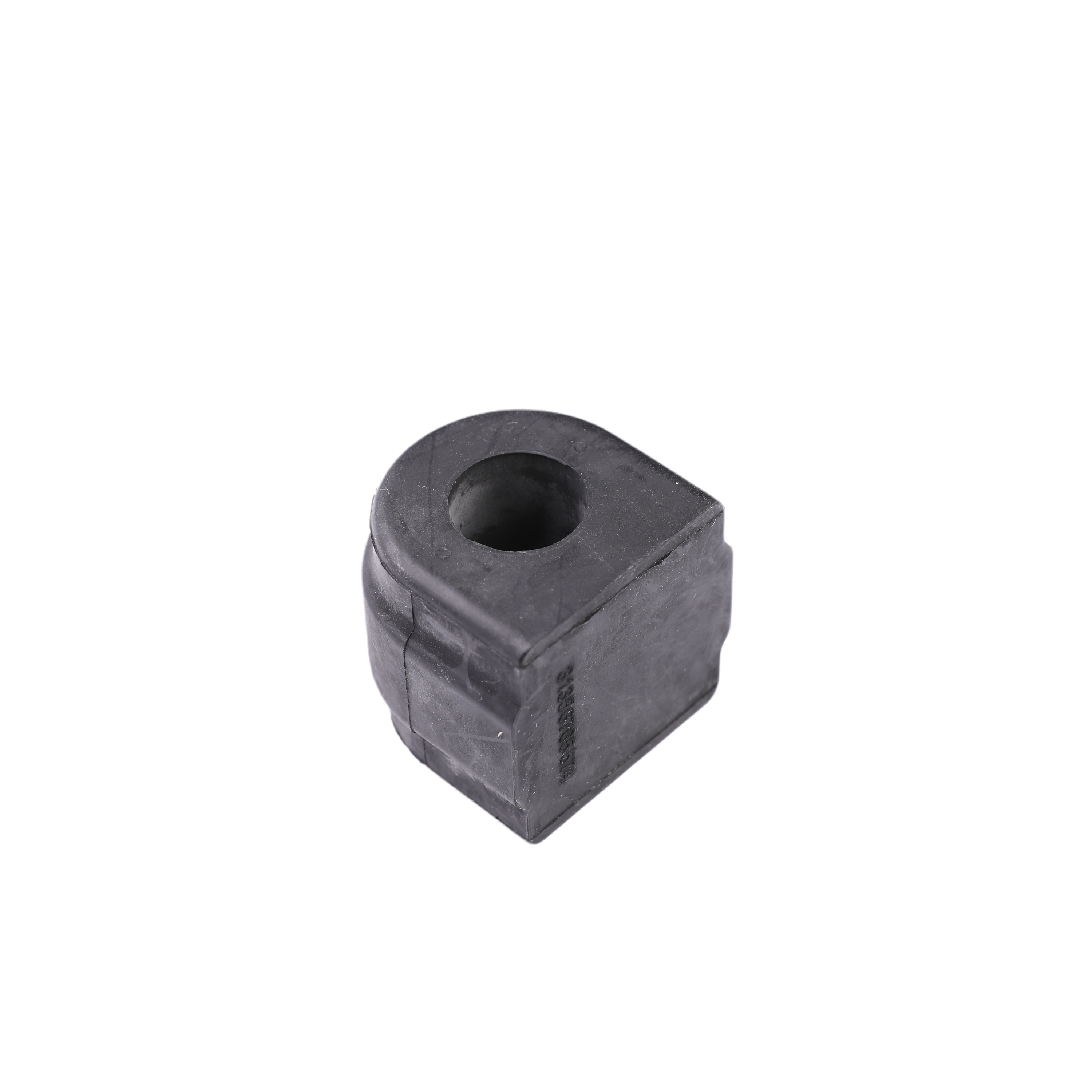
Common signs of a failing stabilizer bar link include a clunking or rattling noise coming from the front or rear suspension when driving over bumps or making turns. This noise is caused by excessive play in the ball joint or bushing due to wear. Other symptoms may include excessive body roll when cornering, a vague or loose steering feel, uneven tire wear, and the vehicle pulling to one side during acceleration or braking. You may also notice that the vehicle’s stability during lane changes is compromised. To verify, you can perform a visual inspection: look for cracked, torn, or leaking bushings, and check for any excessive movement by prying on the link with a tool. If you suspect a problem, it is advisable to have the vehicle inspected by a professional and replace the link if necessary. Driving with a worn link could compromise safety and cause additional stress on other suspension parts. Regular inspection, especially when servicing your vehicle, can help you catch issues early.
Replacing a worn stabilizer bar link with a high-quality replacement restores your vehicle’s handling and safety. A new link ensures precise transfer of forces, reducing body roll and improving cornering stability. This enhances tire grip, which translates to better acceleration, braking, and overall control. High-quality links, like ours, are made from durable materials that resist corrosion and wear, providing long-lasting performance. They also feature premium bushings that reduce noise and vibration for a more comfortable ride. By using a quality part, you avoid premature failure that could lead to other suspension damages, saving money in the long run. Additionally, proper suspension function extends the lifespan of your tires and other components. High-quality links come with a precise fit, ensuring easy installation and correct geometry. At our factory, we ensure that every link meets or exceeds OEM specifications through rigorous testing.
While replacing a stabilizer bar link is possible for a DIY enthusiast with mechanical experience, it requires the right tools and careful attention to safety. The process involves lifting the vehicle securely, removing the wheel, and then unbolting the link from the stabilizer bar and the suspension arm. You will need appropriate wrenches or sockets, and often penetrating oil to loosen rusted fasteners. It’s crucial to ensure the vehicle is supported with jack stands and to torque the bolts to the manufacturer’s specifications to prevent loosening during operation. If you have experience working on suspension systems and have access to a proper workspace, you can perform the replacement. However, for those not comfortable with such tasks, it is recommended to seek professional assistance to avoid mistakes that could compromise safety. Installing a link incorrectly could lead to issues such as noise, premature wear, or even failure.
Inspection intervals for stabilizer bar links depend on several factors, including driving conditions, vehicle usage, and the quality of parts. As a general guideline, it is recommended to have your suspension components inspected during routine maintenance, such as oil changes or tire rotations, approximately every 12,000 to 15,000 miles. If you frequently drive on rough roads, off-road, or in areas with harsh winters (where road salt is used), you may need to inspect them more often. The typical lifespan of a stabilizer bar link can range from 50,000 to 100,000 miles, but this varies based on the factors above. Symptoms like clunking noises or excessive body roll are indicators that inspection is needed. Worn bushings, corrosion, or cracks are signs of deterioration. If you notice any issues, replace the links promptly. Using high-quality parts can extend the service life.

Related Articles

How a Quick Strut Simplifies Suspension Repair?

08

Sep

How a Quick Strut Simplifies Suspension Repair?

The Evolution of Suspension Repairs in Modern Automotive Workshops Replacing vehicle suspension components has historically been one of the most time-consuming, physically demanding, and potentially hazardous jobs in any professional automotive repai...
View More
How does stabilizer bar bushing improve driving smoothness?

11

Sep

How does stabilizer bar bushing improve driving smoothness?

Understanding the Role of the Stabilizer Bar Bushing in Modern Vehicles Vehicle dynamics depend heavily on minor components that coordinate major mechanical forces beneath the chassis. Among these vital components, the stabilizer bar bushing plays a ...
View More
How to match quick strut assembly with suspension systems

16

Sep

How to match quick strut assembly with suspension systems

Understanding Modern Suspension Dynamics When drivers notice a bumpy ride or strange noises over bumps, the root cause usually points back to worn-out suspension components. Restoring that factory-fresh feel requires more than just guessing parts; it...
View More

Customer Testimonials

John Miller
A Reliable Component for Enhanced Safety

We integrate stabilizer bar links from Pingxiang Aoding into our vehicle repair services. The links fit perfectly and last much longer than typical OEM parts. Since we started using them, our customers have reported fewer issues with clunking noises and improved handling. The quality is evident in the materials and construction. They also offer excellent support when we have technical questions. Highly recommended for any professional workshop.

Elliot Parker
Top-Notch Quality and Performance

As a distributor for auto parts, we need suppliers who deliver consistent quality. Pingxiang Aoding’s stabilizer bar links have exceeded our expectations. The corrosion resistance is fantastic, and they are a direct replacement for many popular models. Our customers appreciate the durability and the restoration of their vehicles’ stability. The company is also very responsive and reliable with shipments. We have had zero returns due to defects, which is outstanding. We will continue to expand our partnership.

Get a Free Quote

Our representative will contact you soon.
Email
Mobile/WhatsApp
Name
OE/Car Model
Message
0/1000
Precision Engineering for Unmatched Durability

Precision Engineering for Unmatched Durability

Our stabilizer bar links are manufactured using advanced techniques and materials that guarantee structural integrity under extreme stresses. We employ robots and automated lines to maintain tight tolerances, ensuring consistent dimensions that fit perfectly. The use of high-grade alloy steel and premium rubber bushings provides superior resistance to wear and fatigue. Our links are tested to withstand millions of cycles, simulating real-world conditions. Exposure to salt spray and temperature variations does not compromise their performance. This precision engineering means you can trust our links for safety-critical applications. Whether you’re driving a compact car or a heavy-duty truck, our links deliver reliable service. We also incorporate a hardened ball joint with a dust boot to keep contaminants out, preventing premature failure. Our manufacturing process includes 100% inspection of critical parameters, providing traceability and quality assurance.
Rigorous Quality Control and Certifications

Rigorous Quality Control and Certifications

Our factory is certified with IATF 16949, ISO 14001, and ISO 45001, reflecting our commitment to quality, environmental stewardship, and worker safety. We are recognized as a National High-Tech Enterprise, which underscores our innovative capabilities. Our quality management system follows strict procedures from incoming material inspection to final product testing. Each batch of stabilizer bar links undergoes comprehensive checks, including dimensional verification, material traceability, and functional tests. We simulate operating conditions to ensure the links meet our high standards. Our testing center is equipped with advanced equipment for stress analysis and durability testing. Additionally, we regularly conduct audits to maintain compliance with international standards. This rigorous approach ensures that you receive components that are reliable and consistent. Our certifications are not just badges; they represent our daily practices.
Facebook Facebook Instagram Instagram Email Email WhatsApp WhatsApp TopTop