EN

Daily Mold Maintenance: Safeguarding Consistent Quality of Automotive Chassis Components
Oct.14.2026
In the manufacturing of automotive chassis spare parts, molds serve as the core foundation for product forming. The condition of molds directly impacts the dimensional accuracy, surface quality and production stability of finished components. A well-maintained mold is the first guarantee for delivering products that meet international standards for our global clients. To ensure consistent quality across all batches, extend mold service life and minimize unexpected production downtime, our company has established a standardized daily mold maintenance routine. Every day, our team completes a full workflow including mold warehousing, classified storage, inspection, maintenance and re-stocking. This rigorous daily care underpins reliable order fulfillment for our overseas customers.
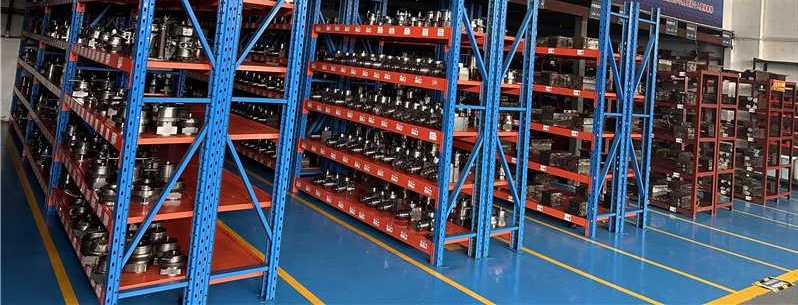
Our mold warehouse operates under strict 6S management standards. The warehouse features heavy-duty racking with clearly marked storage zones for different mold models and production frequencies. Each mold has its designated storage location, enabling fast retrieval and regular inventory checks. The floor is marked with clear yellow safety lines to separate storage bays and access aisles, reducing risks of impact or dropping during mold handling. This orderly environment is the prerequisite for carrying out daily mold maintenance efficiently and safely.
Upon completion of daily production runs, skilled technicians transport used molds to the mold warehouse to kick off maintenance procedures. The first step is thorough cleaning of mold cavities. After production, mold surfaces often carry residual raw material debris, oil stains and release agent buildup. If left untreated, these residues will harden and adhere to cavities, causing surface defects on finished products or scratching mold surfaces and permanently compromising precision. Our technicians use professional dust-free tools to meticulously clean cavities, guide pins, runners and vent slots. Even tiny clogged vents can result in incomplete filling or air bubbles on molded rubber parts, so no detail is overlooked during cleaning.
After cleaning, technicians perform comprehensive inspection and functional testing against our mold checklists. They verify lubrication status of guide pins and guide bushes to ensure smooth mold opening and closing. All positioning pins and locking fasteners are checked for tightness. Cooling channels are inspected for blockages or leakage risks. We also examine mold identification labels to keep records intact. For precision molds, we verify key forming benchmark dimensions to detect deformation. Any defects or abnormalities discovered during inspection are logged immediately in our maintenance database and reported to the engineering team for evaluation. Molds with faults are never returned to storage for future production. This rule prevents sudden breakdowns during manufacturing and avoids delays to export orders.
Once inspections are passed, anti-rust protection is applied. Molds are fabricated from steel, which is vulnerable to rust due to fluctuations in workshop temperature and humidity. Rust on mold cavities will leave pits on finished rubber components and may lead to irreversible mold damage. Our technicians evenly coat cavities, parting lines and moving metal parts with specialized anti-rust agent. Molds are then fully closed and fitted with protective accessories. Treated molds are carefully hoisted and placed onto their assigned shelf positions, with strict anti-collision measures during handling. After all operations, technicians fill in the Daily Mold Maintenance Record Form, documenting mold ID, maintenance date, inspection results and service details. This creates a traceable maintenance archive for every mold in our inventory.
Many of our overseas clients wonder about the value of daily mold maintenance. In the short term, regular daily care reduces common production issues such as mold jamming, flash and defective products. It cuts reject rates, boosts productivity and saves costs from emergency on-site repairs. In the long run, standardized daily upkeep slows mold wear, extends service lifespan and lowers overall mold investment costs. It helps us maintain consistent dimensional tolerances batch after batch.
As a supplier exporting automotive rubber chassis parts to Europe, Southeast Asia, South America and other global markets, stable and uniform product quality is the cornerstone of long-term customer trust. Our products including shock absorber dust boots, stabilizer bar bushings and CV joint boots have strict requirements for dimensional tolerance and surface integrity. Only well-preserved molds can continuously produce components complying with OE specifications and satisfy overseas quality audits.
Mold maintenance is not just occasional major overhaul, but refined work performed day in and day out. We integrate 6S management principles — Sort, Set in Order, Shine, Standardize, Safety and Sustain — into every link of mold warehousing and maintenance. This means thorough cleaning, careful inspection and proper storage every single day. The tidy warehouse and standardized procedures cultivate rigorous working habits among our technicians. We move quality control forward to the pre-production mold maintenance stage.
Quality is the lifeline of manufacturing enterprises, and daily mold maintenance forms an indispensable part of our quality control system. Moving forward, we will keep optimizing our mold maintenance protocols and warehouse management framework. We stick to daily maintenance routines without compromise. With stable and well-conditioned molds, we keep supplying high-precision, reliable automotive chassis rubber components for customers worldwide. Through strict production control, we honor our quality commitments for every export order.